 |
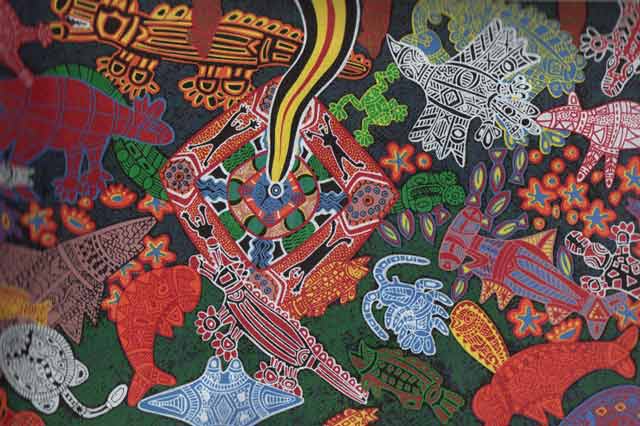
| An Aboriginal creation myth portrayal. |
1) It is part of human nature to be curious. We need an explanation for everything, or else we are not satisfied. I think that this is the driving force beyond the formation of creation stories and myths of cultures worldwide. We attempt to explain our origins because in reality, some of us aren't quite sure what to believe. As human beings, we need reasons and logic to give us a sense of comfort and to help us define who we are both as individuals and as a society; we want to feel like a part of something bigger than any one person. These creation "myths" can still be found throughout the world to this day, although they may not be perceived as myths to some. The Bible offers an explanation of the origin of mankind, and Charles Darwin has proposed a theory that some people hold as fact and is even considered part of many schools' lesson plans for science classes. Some cultures pass down creation stories by generation, and even more common are fables that contain life lessons. Cultures find ways to leave a bit of themselves in all that they do, and just one way is through the telling of stories that seek to provide an answer to the question of the origin of mankind.
2 & 3) From the creation stories of the Maori and Aboriginal cultures, we can begin to tell what each people values and believes in. Both the Maori and Aboriginal creation myths stress the existence of gods, and many at that. Each deals with a family of gods and the separation of their parents. There are many offspring in both stories, emphasizing the importance of repopulation within each culture. Family values are a common theme between the two cultures, with the Maori stressing that one should never turn on their family, especially their parents, and the Aboriginal calling for families to "live peacefully with one another." Man is created first in each story, coming back to the primitive idea of male supremacy over females. Individually, however, the stories do have their differences. The Maori consider the mother to be earth, displaying their strong appreciation for the creatures living on it, especially the humans, who are the only such organisms mentioned. The dark tone of the myth suggests their feelings towards death, and how the love of two people was seen as enough to prevent this. The Aboriginal creation story takes on a whole new tone, environmentally concious, and using the sun as a mother figure; hinting at the amount of value they see in life and their respect for animals. The story is nature-based and stresses growth, both physically and mentally. These differences may have resulted from the different locations and environmental factors of their countries, which could easily persuade each culture's specific view on the sun, the earth, and the animals. The lighter tone of the Aboriginal story may have been a result of a more positive interraction between the people and the animals, while the Maori may have condemned nature more because of harsh conditions at the time, but then again, I can only assume.
4) Although they can be seen as outdated, the creation myths of both the Aboriginal and Maori cultures reveal challenges that still exist to this day. The Aboriginal story is very environmentally concious, and calls for the rest of the world to be the same. If modern times were as concerned with the environment as they had been, who knows if global warming would have ever been theorized? Would the condition of the ozone improve? Would we have a longer life expectancy rate and less polution, simply because we began to embrace nature the way the Australian Aboriginals had? Besides this problem, the Maori story addresses the amount of crime in the world. The story tells us of children struggling to separate and kill their parents in the quest for their own personal gains. Selfish reasoning drove them to attempt murder on their own parents, showcasing the greed that can be found across the globe, as well as weakening familial ties that cause children to become unstable without a strong sense of unity.
 |
| A Maori creation myth portrayal. |


